Support MeroLyrics
Enjoy ad-free music and lyrics
How to Create Your Own Guitar Chord Progressions
With MeroLyrics as your creative companion, you can transcend playing pre-written songs and start crafting your own music using guitar chords.
New Released Songs
Trending Artists
How to Create Your Own Guitar Chord Progressions
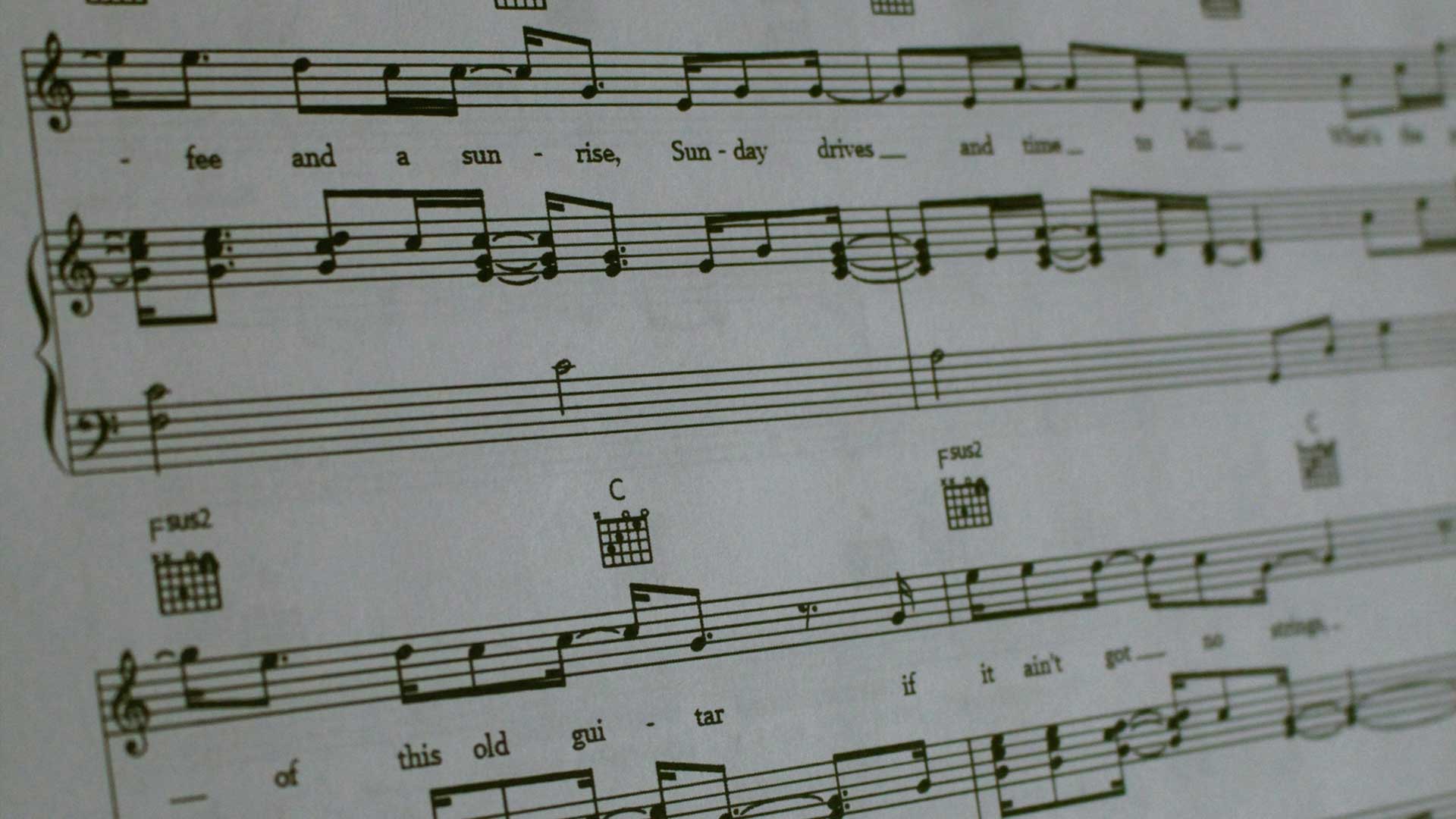
With "MeroLyrics" as your creative companion, you can transcend playing pre-written songs and start crafting your own music using guitar chords. Chord progressions are the heartbeat of any song, providing the harmonic structure that supports melodies and lyrics. This extensive guide walks you through the process of building unique progressions, from understanding the basics to experimenting with advanced techniques, empowering you to express your musical identity.
Understanding Chord Progressions
A chord progression is a series of chords played in a sequence to create a harmonious flow. They are often described using Roman numerals based on the key (e.g., I, IV, V). Common examples include:
- I-IV-V: C-F-G in C Major, a classic rock staple.
- vi-IV-I-V: Am-F-C-G, popular in pop music like "Let It Be."
- ii-V-I: Dm-G-C, often used in jazz for a smooth resolution.
Each key has seven chords derived from its scale, and understanding these relationships is the first step to creating your own.
Steps to Create Your Own
-
Choose a Key: Start with C Major for its simplicity, offering chords like C, Dm, Em, F, G, Am, and Bdim. This key avoids sharps or flats, making it beginner-friendly.
-
Pick a Pattern: Begin with a familiar structure like I-V-vi-IV (C-G-Am-F) for a catchy pop vibe or ii-V-I (Dm-G-C) for a jazzy feel. Write down your chosen numerals to keep track.
-
Experiment with Variations: Swap chords (e.g., replace G with G7 for a bluesy twist) or extend the progression (e.g., add a vi chord like Am). Try unexpected jumps, like moving from I to iii (C to Em).
-
Test with MeroLyrics: Input your progression into a song template on "MeroLyrics" to hear it with lyrics or a backing track. Adjust based on how it feels and sounds.
-
Refine and Repeat: Play your progression repeatedly, tweaking chord durations or adding a bridge (e.g., I-vi-IV-V). Record it to evaluate and refine over time.
Creative Ideas to Inspire You
- Mix Major and Minor: Combine C, G, and Am for a balanced emotional range. This contrast adds depth, as heard in many "MeroLyrics" songs.
- Incorporate Seventh Chords: Add G7 or Fmaj7 to introduce richer tones, perfect for slow ballads.
- Draw from MeroLyrics: Analyze progressions in songs like "Wonderwall" (Em-G-D-A) and adapt them with your twist.
- Layer with Rhythm: Experiment with strumming patterns—try a down-down-up-up-down-up beat to give your progression character.
- Collaborate: Share your progressions on the "MeroLyrics" community forum to get feedback and collaborate with others.
Practice Plan
- Dedicate 20 minutes daily: 5 minutes to choose a key, 10 minutes to build a progression, and 5 minutes to test it on "MeroLyrics."
- Start simple, then challenge yourself with keys like G Major (with one sharp) after a week.
- Keep a notebook of your progressions to track your growth.
With "MeroLyrics" as your creative hub, you can turn chord progressions into personal masterpieces. Begin experimenting today and let your musical voice shine!
Support MeroLyrics
Enjoy ad-free music and lyrics
New Released Songs
Trending Artists
Support MeroLyrics
Enjoy ad-free music and lyrics
Support MeroLyrics
Enjoy ad-free music and lyrics